8-11 January 2026
Around 1,500 ‘WHEN?’ and ‘WHY?’ Tiles Will Appear on London’s Thames Foreshore
“I Have Only Two Questions”
is a new work by the street artist 742
I Have Only Two Questions
On the South Bank of the Thames in London (location), people have begun discovering small concrete tiles stamped with the words “WHEN?” and “WHY?”
I Have Only Two Questions is a new work by the anonymous street artist 742. From 8 to 11 January, the artist will continue adding palm-sized question tiles on Bankside Beach, between Millennium Bridge and Blackfriars Bridge. In total, around 1,500 such art objects are planned.
The work invites open, informal interaction and will be accessible during low tides from 8 to 11 January 2026. Every object is handmade and signed by the artist.
Thu 8 January, 10am–1pm
Fri 9 January, 10am–1pm
Sat 10 January, 11am–2pm
Sun 11 January, 11am–2pm
*All times approximate
Tide Times
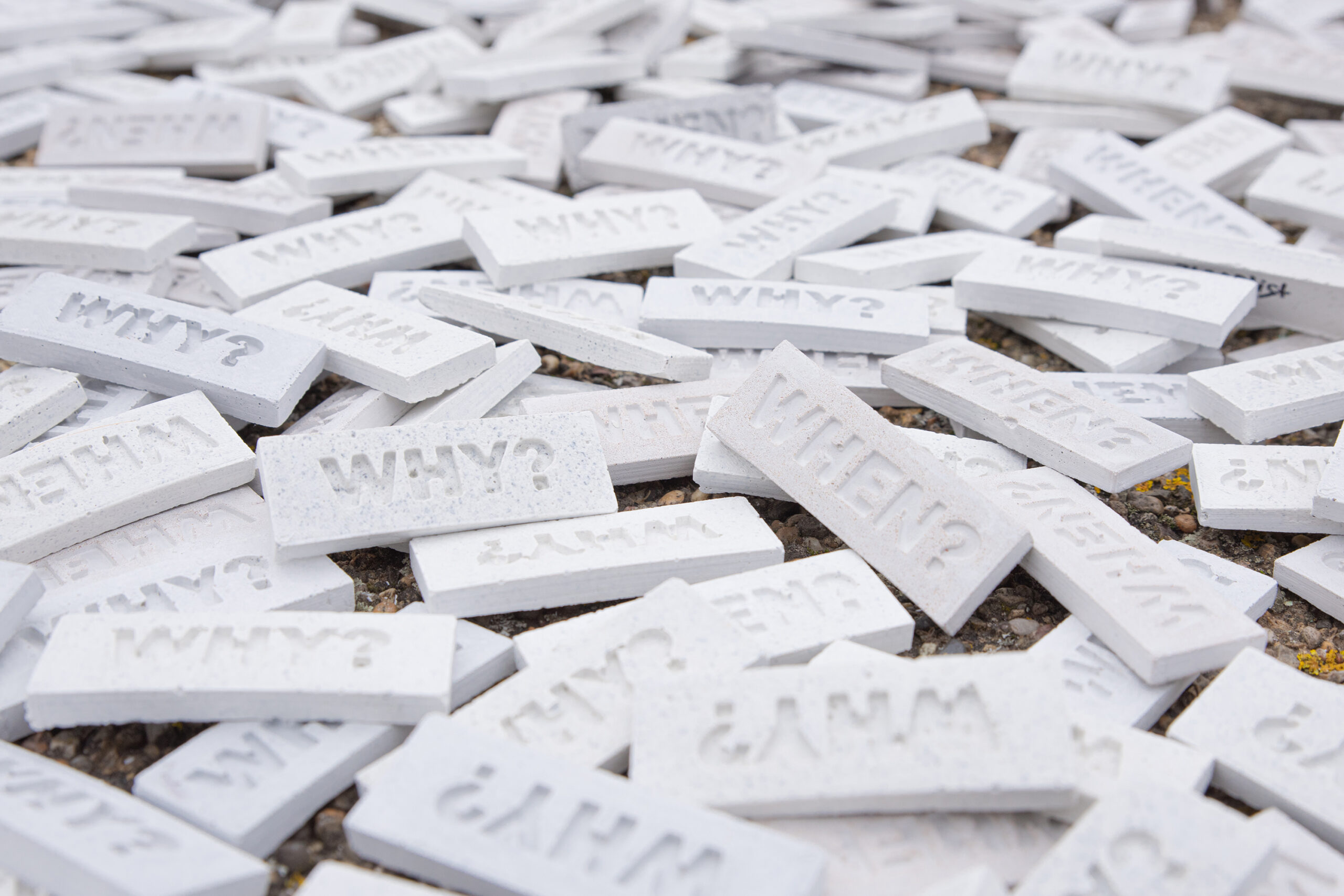
Each object is handmade: the WHEN? / WHY? concrete tiles in preparation. I Have Only Two Questions, 2026. © 742
“I often watch people searching the riverbank for artefacts and traces of the past (mudlarking). Others just look for stones to keep as a keepsake. This kind of searching doesn’t necessarily imply a result; it’s always a process, a way of being. At some point, I began to wonder what would happen if, instead of objects, people started finding something abstract, for example, questions.
We live in a world where, on the one hand, there is access to an enormous amount of information, often just “junk”. On the other hand, we exist in a state of not knowing and uncertainty, facing distressing and unjust events every day, for which there are no simple explanations. As a result, more and more questions and doubts appear.
The words WHEN and WHY were chosen deliberately. For me, WHEN is about survival; WHY comes later, when reflection begins.
I Have Only Two Questions is about each person’s individual experience. It was important to me that it didn’t sound like an interrogation, a demand, or a slogan. That’s why the tiles are small and unobtrusive, preserving the element of chance in the search: you may find them, or you may not notice them at all. Everyone decides how to interact with them: walk past, take one, or leave it where it is. After all, we’ve accumulated many questions, and they will be different for each of us,” the artist comments.
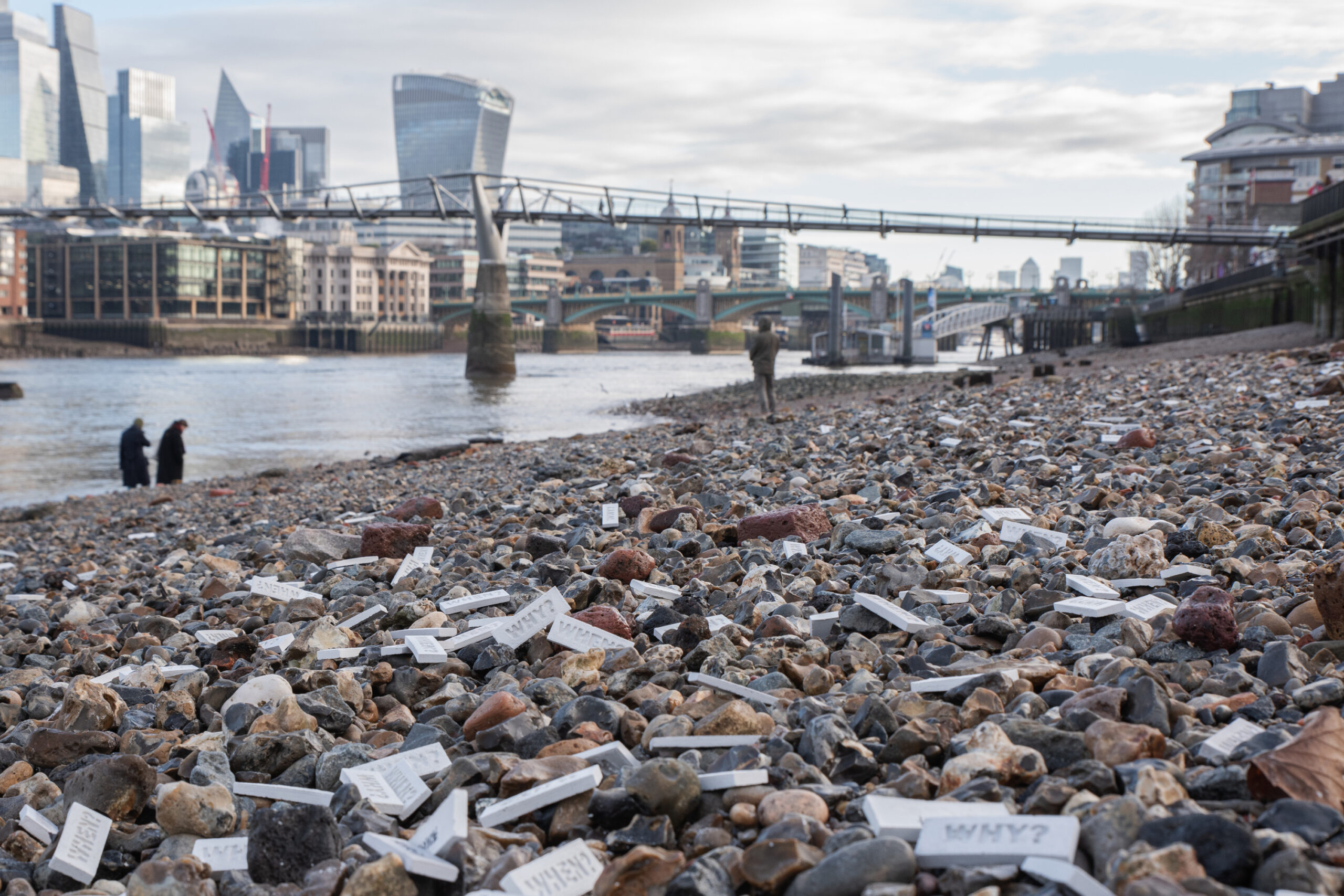
WHEN? / WHY? tiles on Bankside Beach (South Bank of the Thames), London, 2026. ©742
Who is 742?
742 is an anonymous street artist working with temporary interventions in public space. 742 explores themes of memory and collective experience, with the site itself functioning as a carrier of meaning and an inseparable part of the work.
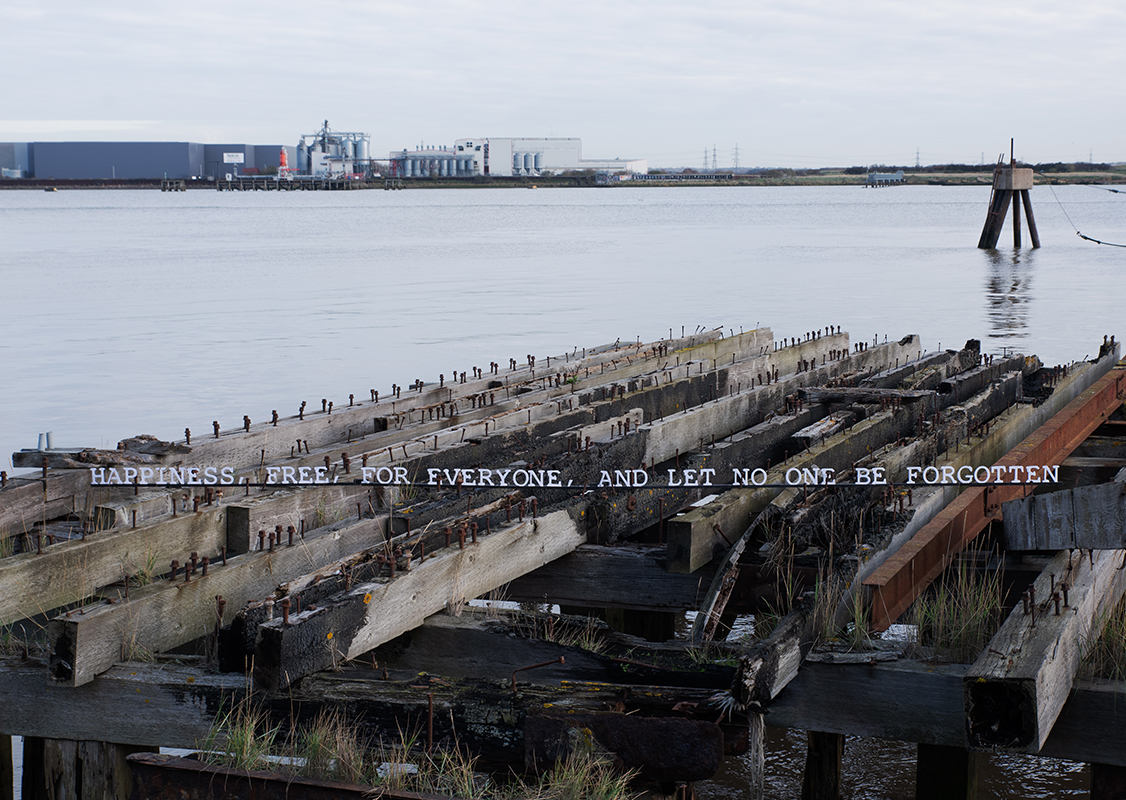
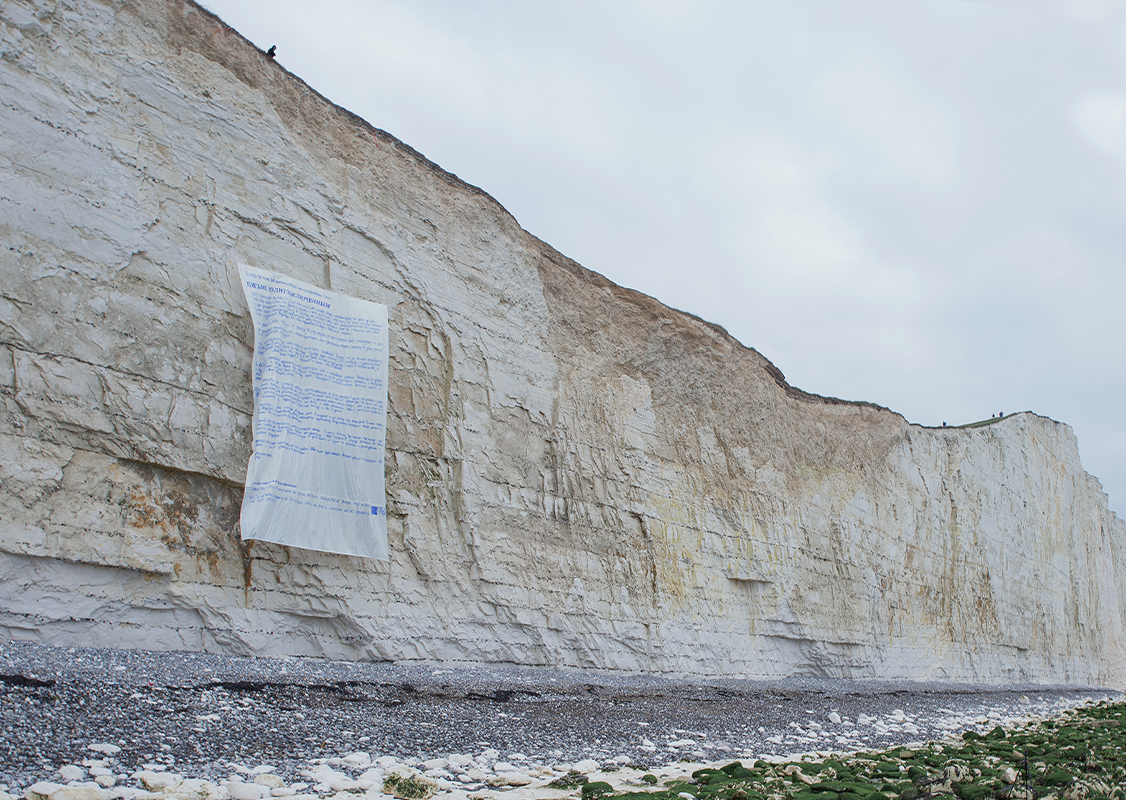
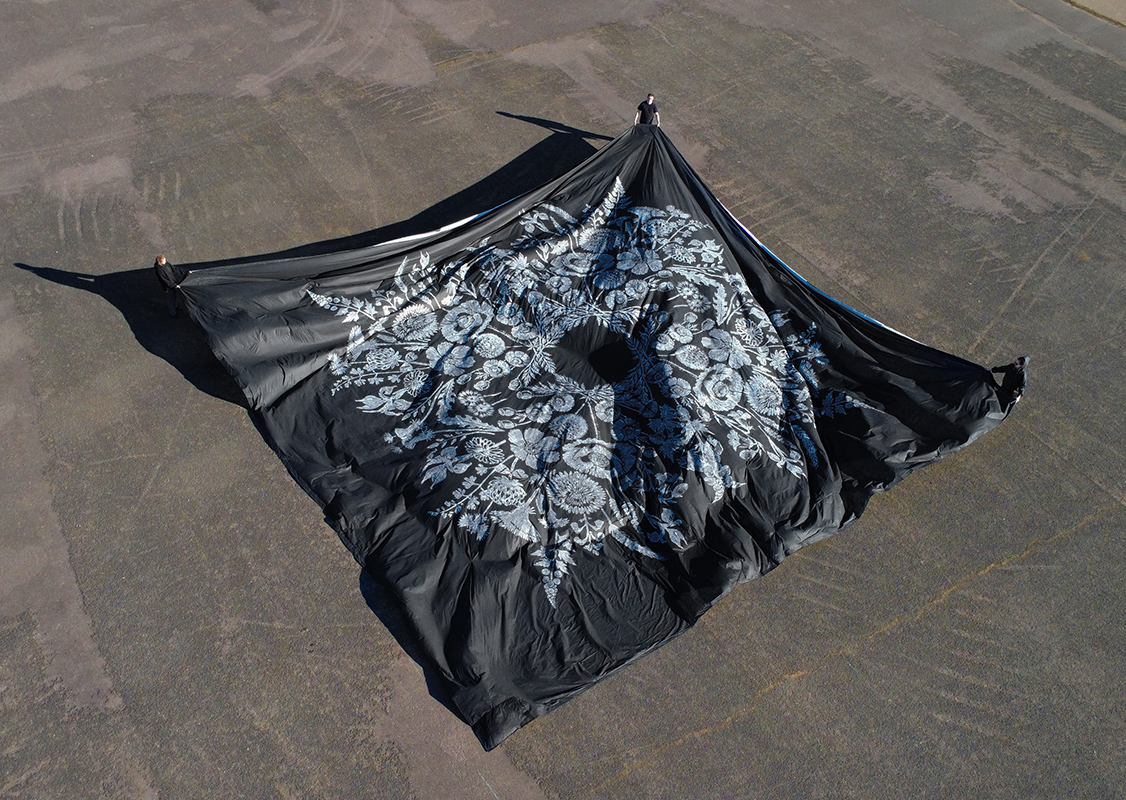
The artist has realised large-scale projects in London and beyond, including the 60-metre mural “Poetry of Numbers. A Hundred Years in the Shadow of War”, created on the Thames foreshore in Tilbury. In 2025, the artist also presented the large-scale textile installation “Where Have All the Flowers Gone?”, installed across the former RAF Greenham Common site.
Bankside Beach
FAQ
What are the tiles made of?
The tiles are cast from a water-based acrylic–mineral composite (Jesmonite AC730): a water-based acrylic polymer binder combined with a mineral/cement component.
In its finished state:
~96% mineral (cement) base
~4% acrylic polymer.
In the wet mix before drying:
~88% mineral
~9% water + ~3% acrylic.
Jesmonite was developed in the UK in 1984 (Peter Hawkins). It is widely used as a versatile, durable alternative to plaster and to certain solvent-based resins. It is often chosen for decorative and functional objects (including plant pots and garden items) as a water-based alternative to solvent-based resins—especially where polyester resins are undesirable. According to the Safety Data Sheet (SDS), the material is not classified as hazardous to the environment.
Important: the manufacturer advises preventing the product—in the form of dry powder/dust and any leftover mix—from entering drains/sewers and from contact with surface or ground water.
Where is the work located?
On Bankside Beach on London’s Thames foreshore, between Millennium Bridge and Blackfriars Bridge, beside Tate Modern.
When can it be seen?
The work is visible during daytime (recommended) low tides from 8–11 January 2026. Please see the tide times on this page.
Thu 8 January, 10am–1pm
Fri 9 January, 10am–1pm
Sat 10 January, 11am–14pm
Sun 11 January, 11am–14pm
*All times approximate Tide Times
Is it free to visit?
Yes. This is an outdoor public artwork in an open public space.
Do I need a ticket or booking?
No booking is required. Visitors can come during the low tide window.
Can I take a tile?
Yes. The work is designed for open, informal interaction, and you are welcome to take a tile with you.
Is it safe to access the foreshore?
Please take care. The foreshore can be slippery and muddy, and conditions change quickly with the tide. Wear suitable footwear and check local tide conditions before visiting.